


How To Memorise an Essay- Basics & Advanced Steps ? A question that might arise in the mind of the student or person taking an examination is how to memorise an essay? The actual thing behind this question is how to memorise words, sentences and paragraphs. Memorising any literature work is not difficult, but you should follow some techniques explained below. Whatever stuff it may be, if you want to remember something, then you do it with full concentration. It would help if you initially made out short-term goals by focusing on what you have to learn first.
If you are thinking about memorising an essay for exams, we will tell you the steps. We have come up with some of the basic and advanced ideas for your memorising problem; by following these simple 3 steps and avoiding a few mistakes, you can memorise everything you want with any problem.
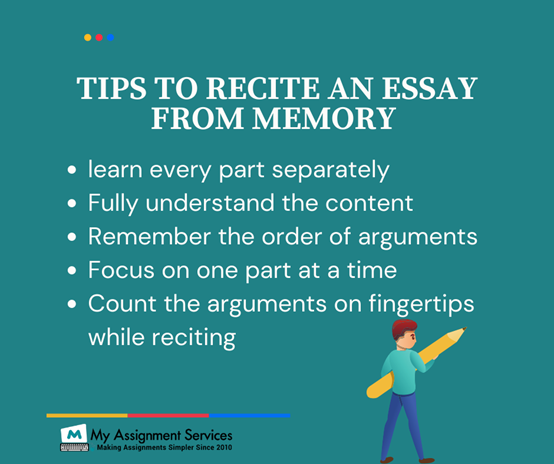
Why It's Important To Memorise An Essay?
Memorising any literature topic is very important because, without any memory, you cannot even score good marks in your examination. You can forget all things if you do not have good memory power. For example, if you have written an essay with 100 words and it's time for you to give this essay to the examiner of your examination who has set some questions, how will he know whether the answer or solution is correct or wrong? He may not be able to judge it yourself as he doesn't know what exactly he had written in his essay.
So, for verifying your work - "CONCENTRATION AND MEMORY" come into play. If nobody asks about your answer during exams, there are still chances that some other people are also asking related questions or suggestions about it. So, memory is very important in every walk of life.
3 Steps For Memorising
How can memorise essays can be done in with 3 steps:
- Register: You should take a pen and paper and note down what you need to memorise (this is nothing but the thesis). For example, if your thesis is ' Global Energy Crisis ', then write it down on paper.
- Revise: Now, revise this thesis by rephrasing it in your own words or giving examples for a better understanding of data, i.e. what you have written in point 1 and done with full concentration and devotion, just like how we do when we read something again and again either loudly or silently within ourselves so that we don't forget anything important from that material which was given to us for our reference purpose. The revising process will help you memorise all information very well because while revising, if you do concentration, then brain cells will get activated, and it stores all information in the long-term memory.
- Retain: After this, by doing a review of your writing 3 times a week for 4 weeks, you can retain whatever stuff you have written with full devotion. During this process, you should never miss any point or sentence because whatever mistake or omission may happen during this phase is going to be very harmful to your whole study process. So, while giving your revision, remember that - "REVISION IS THE MOST IMPORTANT PART OF THE STUDY". In case you forget anything from what you have studied, then never mind, just continue with your study schedule but make sure that whatever has been mentioned in your thesis or the starting point of the essay should be clear in your mind. Always keep this thing in mind that revising and reading, again and again, is not at all a waste of time, just like how we do when we sleep as, during sleeping, our brain cells perform their daily tasks.
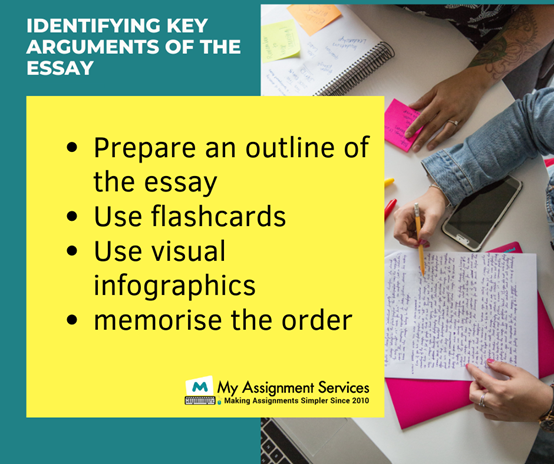
How Can A Good Memory Be Developed?
In order to develop a good memory - firstly, you must know that your brain cells are very active and dynamic in nature, which means they never get packed or stuffed with any information because whenever new information is given to them, then it directly flows from one cell to another related cell which later on help you to find this thing easily whenever needed. If you want to create a very strong memory power, then follow the steps.
- Collect all literature stuff (notes, hand-written papers, diagrams etc.) that you find important and essential according to your subject matter in one place only for your review purpose.
- Try to sketch or draw all things related to your topic but don't pay attention to the drawing standard. Rather, watch only what exactly it is trying to tell you (for example, do a rough sketch of simple diagrams).
- Now read all points which you have collected in front of yourself while sitting comfortably on a bed or sofa or chair so that blood circulation could be improved properly by releasing stress from every part of the body.
- While revising everything, keep relaxing because if you make your mind busy with stress-producing thoughts, then you may not be able to memorise anything properly.
- After that, take example essays or short answer type questions and try to solve them within a given time limit (do it three times consecutively without mistake).
- Now revise all things again after a one week gap because it's better than doing everything daily for 1 hour approximately depending upon the availability of time in your hands.
- Maximum benefits would be achieved by following all these steps strictly; otherwise, no remarkable progress could be seen through this process, so don't skip any step while doing preparation for your exams.
- Stay confident, calm and relaxed during the examination because these are very important qualities that the examiner wants to see in a candidate.
Learn how to acknowledge any source of information using the APA 7th style.
Download Now
Mistake To Avoid During Memorising An Essay
While memorising any literature stuff, you should never miss any point or thesis (introduction part of the essay). While giving your revision, if you miss some points, it may result in an error. If you make any mistake while revising, then there are chances that you will not be able to remember all things properly, which is just like how we make mistakes while studying. Suppose there were 5 sentences in your thesis, and you missed 2 sentences during the review process, don't worry. Just go through all remaining points that can easily grasp your attention only by reading them once but never skipping anything.
But, after doing this kind of activity 3 times consecutively with full devotion and concentration then, finally try to give your essay within 10 minutes only to the examiner of your examination; otherwise, he may lose his interest in checking your answer. If you think you can give an essay within 5 minutes, then never go for it because giving such a shorter time means that you will not be able to cover all things properly. By doing this, there are chances that the examiner may get annoyed with you.
Facing Problems in Memorising? Ask us For Help!
Just memorising an essay without any mistakes is not enough, but it's also very important to remember what you have written in your essay. Unless you do not do this thing, you cannot expect good marks in your examination. We always sleep after memorising anything because our brain leaves all information that it has learned while memorising that particular stuff. Memory power is just like muscle power; the more you use it, the stronger it becomes, so try to improve your memory capacity by making short notes of things that are difficult for you or making some points on a paper before going to bed. Make sure that whatever points or information you write down over there should be visible at least the next morning; otherwise, don't waste time in making it more readable.
The problem with most students is that they just write down some points on their hands during exams, and if they can't find anyone, they feel helpless or get distracted, which makes them fail. So, make sure to go through all points before writing anything over there because it will help you a lot in solving difficult questions easily. If you face any problem with memorising or jotting down important notes or points, you are always welcome! Our mentors at My Assignment Services are always available to guide you!
You just have to fill out the form, and we’ll reach out to you in no time!

Related Study Materials
Our Experts can answer your Assignment questions instantly.
Ask QuestionAbout the Author

RELATED POSTS
0 Comment
Get It Done! Today
1,212,718Orders
4.9/5Rating
5,063Experts



Loved reading this Blog? Share your valuable thoughts in the comment section.
Add comment